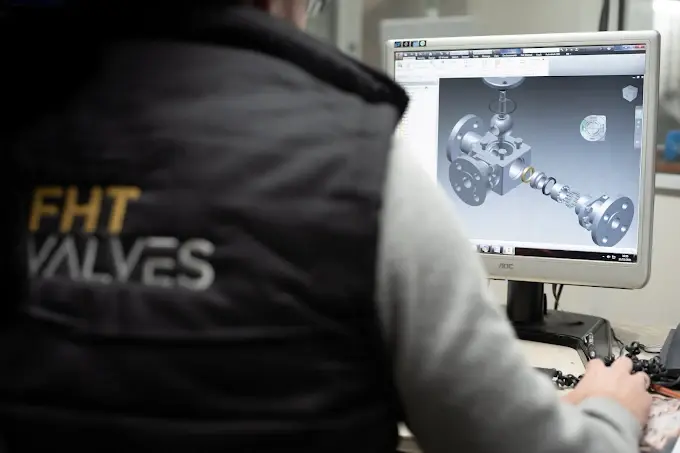
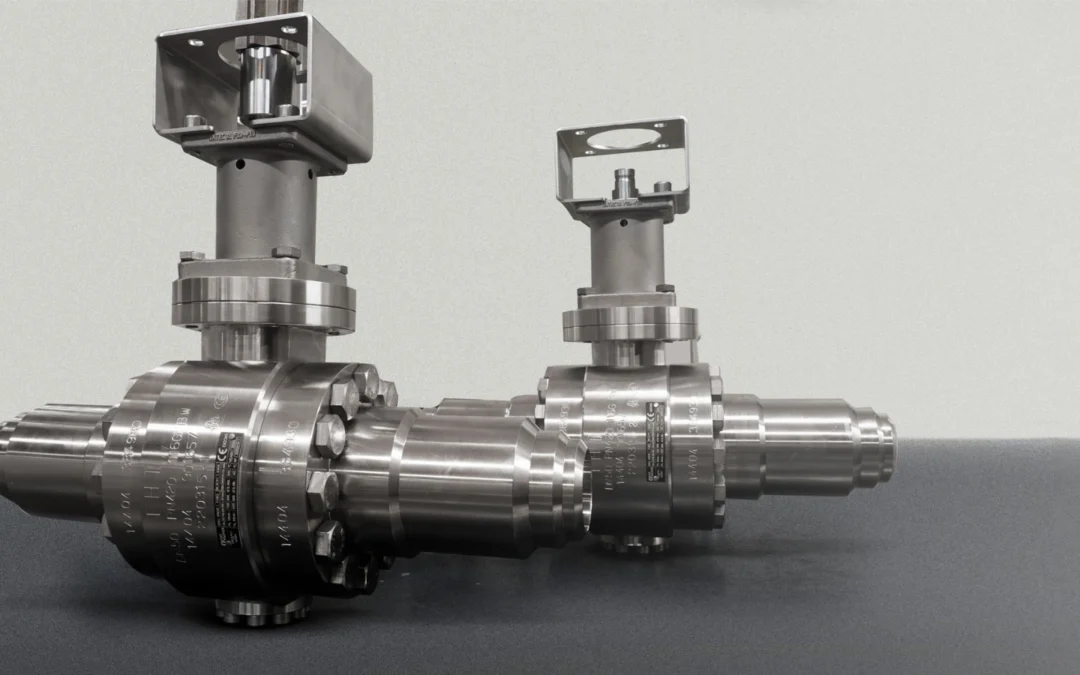
Ball valve experts are manufacturers and engineers who can design, select and validate a valve for a specific set of process conditions: pressure, temperature, fluid, applicable standards and expected service life. Their value lies not in the catalogue, but in knowing...
In oxygen service, the danger lies not in leakage but in ignition. Unlike other industrial gases, oxygen acts as an oxidizer: in the presence of traces of grease, oil, metal particles, or any residual hydrocarbon, even a minimal energy source — friction, adiabatic...
Ball valves with soft polymer seats for high temperatures make it possible to maintain tight shut-off and reliable dimensional stability in services that significantly exceed the practical limit of virgin PTFE. The compound used in these seats, known as Fluoro HT, has...
V-port ball valves are a variation of the conventional ball valve specifically designed for flow control applications. Their main difference compared to a standard ball valve lies in the closure element: instead of a ball with a circular bore, they incorporate a ball...
DIN and ANSI are two independent standards systems that define flange dimensions, pressure classes, and material specifications for industrial ball valves. DIN—now largely integrated into European EN standards—uses metric units and PN pressure ratings. ANSI is based...
The Wafer design is one of the most widely used mounting configurations in the process industry. However, selecting it correctly requires understanding when it is the optimal solution and when other designs —Lug or Flanged— are better suited to the application. What...